If you have never hired a concrete pump before, you might be wondering exactly what happens when the equipment arrives at your property or construction site. How long does everything take? What do you need to prepare? And who is responsible for getting the concrete into position?
Whether you are pouring foundations for a house extension, laying a new driveway or working on a larger commercial project, understanding the process can help you prepare for a successful concrete delivery.
At Spot On Concrete, we provide concrete pumping services for domestic and commercial projects across Yorkshire and the surrounding areas. Our experienced operators work alongside your site team to help ensure concrete reaches the required location efficiently.
In this guide, we explain what typically happens on the day of your concrete pump hire, from the first vehicle arriving to the final clean-up.
Preparing Your Site Before the Concrete Pump Arrives
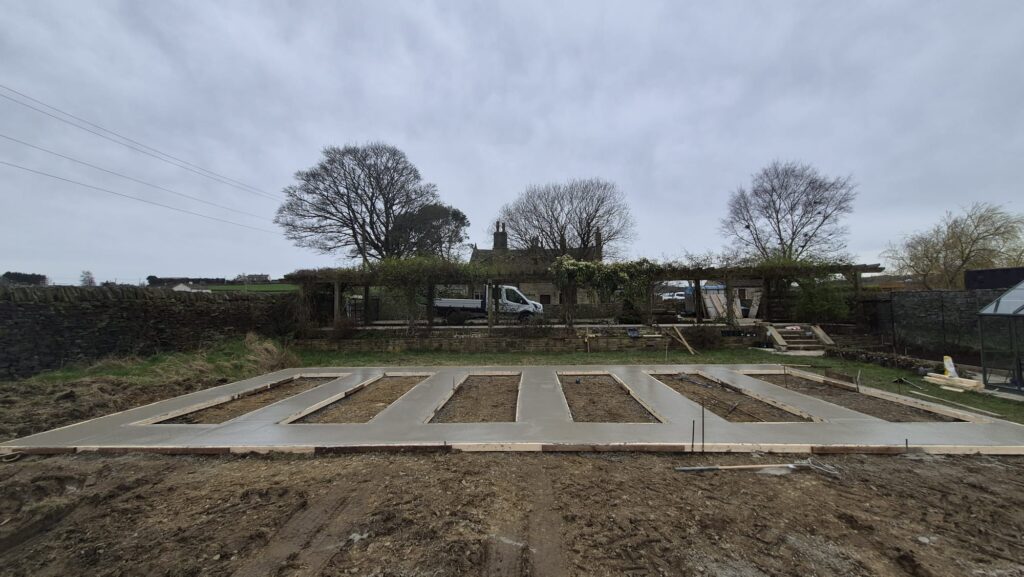
A successful concrete pour starts before the pumping equipment reaches your site. By the time the operator arrives, the area receiving the concrete should already be prepared and accessible.
Leaving important preparation until the last minute can delay the delivery, increase hire costs and make the work more difficult than necessary.
Check that the pouring area is ready
Before your scheduled delivery, make sure:
- The ground has been excavated to the required depth.
- The sub-base has been prepared and compacted where necessary.
- Formwork and shuttering are correctly positioned and secured.
- Reinforcement and membranes are installed where required.
- The concrete quantity and specification have been confirmed.
- The route between the pump and pouring area is clear.
- A suitable place has been arranged for equipment washout.
- Enough competent workers are available to place and finish the concrete.
You should also check the weather forecast. Heavy rainfall, freezing temperatures or unsuitable ground conditions can affect whether the work can proceed as planned.
If you are scheduling a pour during colder weather, our guide to using ready mix concrete during winter explains some of the additional precautions that may be needed.
Make sure vehicles can access the site
Concrete pumping vehicles are heavy, and the operator needs a suitable position from which to work.
Check for restricted entrances, parked vehicles, low branches, overhead cables, underground services and anything else that could obstruct access.
If the vehicle needs to stand on a public road, any necessary permissions and traffic management arrangements should be agreed in advance.
It is also important to tell us about access limitations when booking, rather than waiting until the pump arrives.
Arrival of the Concrete Pump and Positioning the Vehicle
On the day of your hire, the concrete pump will arrive at the agreed time or within the arranged delivery window.
The operator will assess the site, confirm the planned pumping route and identify where the equipment can be positioned safely.
The exact arrangement depends on whether you are using a ground line pump or a boom pump.
Positioning a ground line pump
A ground line pump normally remains close to the delivery vehicle access point. Pipes and flexible hoses are then laid out towards the area where the concrete will be placed.
This type of setup is particularly useful for projects where concrete needs to travel around buildings, through suitable access routes or into rear gardens.
Positioning a boom pump
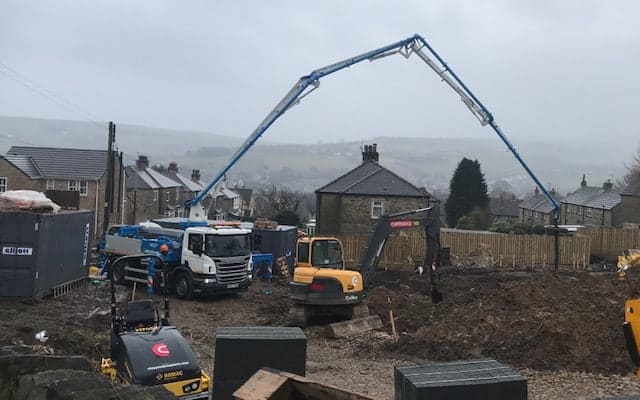
A boom pump uses a hydraulic arm to transport concrete towards the required location.
Before operating the boom, the vehicle must be positioned on ground capable of supporting its weight and the forces produced during pumping.
The operator will deploy the stabilisers or outriggers as required, taking account of ground conditions, nearby structures, underground voids and overhead obstructions.
For both types of pump, the operator must be satisfied that the equipment can be set up and operated safely before work begins.
What should you do when the pump arrives?
Have someone available who understands the project and can confirm the pouring location, access requirements and agreed working arrangements.
This helps the operator prepare the equipment without unnecessary delays.
Setting Up the Concrete Pump, Pipes and Hoses
Once the vehicle has been positioned, the next stage involves preparing the pumping equipment.
For a ground line pump, the operator will unload the necessary pipes and hoses, connect them securely and arrange a suitable route from the vehicle to the pouring area.
Steel pipes may be used for longer or more demanding runs, while flexible rubber hoses allow concrete to be directed into specific areas.
Where possible, the pipeline will follow a practical route with unnecessary bends avoided.
Every connection needs to be suitable for the system and properly secured.
The pipes and hoses must also be positioned to reduce the risk of movement, damage, obstruction and contact with people who are not involved in the pumping operation.
Priming the concrete pump
Before the concrete starts flowing, the operator normally primes the pipeline.
Priming involves passing a suitable lubricating material through the system to coat the internal surfaces and help the concrete move through the pipes.
Depending on the pump, concrete specification and approved procedure, this may involve a cement-based grout or another suitable priming material.
The operator will make sure any priming material is managed appropriately rather than allowing it to contaminate the structural concrete.
This preparation helps reduce friction and the likelihood of blockages when pumping begins.
Does every concrete pump use the same setup?
No. The equipment, pipework, working area and setup requirements will vary depending on the pump and the project.
If you are still deciding which equipment is appropriate, our guide on how to choose the right concrete pump explains the main options for different construction requirements.
Safety Checks Before Concrete Pumping Begins
Before concrete is discharged, the operator will carry out the necessary equipment and operational checks.
Concrete pumping involves pressurised machinery, moving equipment and heavy vehicles, so everyone involved needs to understand the planned operation.
Checks typically include the condition of the pipes and hoses, the security of connections, the stability of the pump and the suitability of the working area.
The operator will also confirm that the pipeline is positioned correctly and that the placing team understands the agreed method of work.
Keeping the pouring area safe
Workers who are handling or placing concrete need suitable protective equipment, including protection against contact with wet concrete.
Wet concrete can cause serious skin irritation and chemical burns, so direct contact should be avoided.
Only competent, authorised personnel should handle the delivery hose, and they must follow the operator’s instructions.
People who are not involved in the operation should remain clear of the machinery, pressurised pipework and discharge area.
The operator will also establish how pumping will be started, paused and stopped, including how the placing team should communicate if a problem occurs.
Once the checks are completed and the site is ready, the concrete delivery can begin.
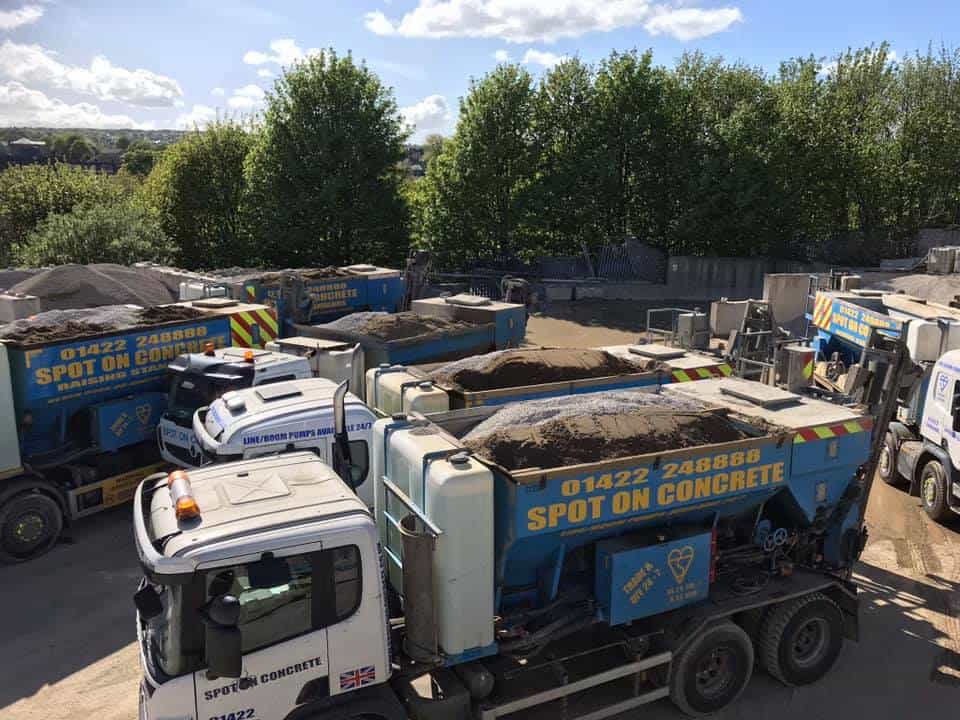
Arrival of the Concrete Delivery Vehicle
The arrival of the concrete delivery vehicle is an important part of the day’s schedule.
Ideally, the concrete pump will already be positioned, prepared and ready to receive the material.
This coordination helps reduce waiting time and avoids leaving freshly mixed concrete standing unnecessarily.
The delivery vehicle will approach the pump’s receiving hopper using the agreed access route.
Once correctly positioned, concrete can be discharged into the hopper, ready to be pumped towards the required location.
Coordinating concrete supply and pump hire
When arranging a concrete pour, it is important to consider the timing of both the pump and the concrete delivery.
At Spot On Concrete, we also provide ready mix concrete for domestic and commercial construction projects.
Planning the concrete supply and pumping requirements together helps ensure the correct material arrives when the placing team is ready.
The concrete specification must also be suitable for pumping and the intended application.
For larger pours requiring multiple deliveries, vehicles may need to be scheduled in sequence to maintain a suitable flow of concrete without unnecessary delays.
Pumping and Placing the Concrete
Once the delivery vehicle begins discharging into the hopper, the operator can start the pumping process.
The pump moves the wet concrete through the connected pipework or boom towards the designated pouring area.
The operator monitors the equipment and adjusts the pumping rate as necessary to suit the concrete and the placing team’s progress.
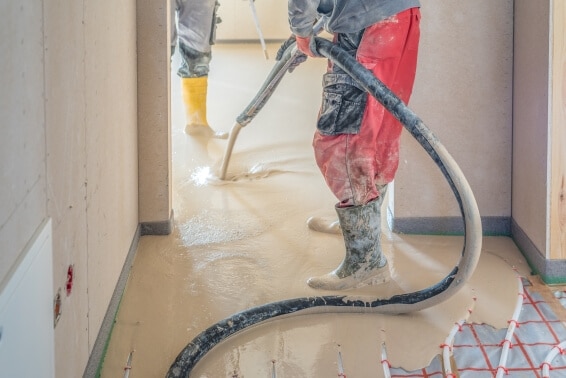
At the discharge point, the placing team directs the material into the prepared formwork or excavation.
Who handles the concrete during the pour?
One of the most important things customers should understand is the difference between operating the pump and placing the concrete.
The pump operator is responsible for the safe operation of the pumping equipment.
The customer’s builder, groundworker or concrete placing team is normally responsible for receiving, spreading, compacting, levelling and finishing the concrete, unless additional arrangements have been agreed.
This means you should not assume that hiring a concrete pump automatically includes a complete concrete laying and finishing service.
For example, if you are pouring foundations for a house extension, the operator will control the concrete pump while the designated placing team directs and distributes the concrete within the trenches.
If you are laying a concrete slab, the team will need to spread the concrete, establish the correct levels and prepare the surface for finishing.
Maintaining a steady concrete flow
During the pour, communication between the operator and the placing team is essential.
The pumping speed should match the rate at which concrete can be safely received and placed.
If the placing team needs more time to distribute or level the material, they can communicate with the operator so the flow can be adjusted or stopped as appropriate.
The operator will also monitor the pumping system for unusual pressure changes or signs of a blockage.
If an issue occurs, pumping should be stopped and the operator’s safe procedure followed. Customers and other workers should never attempt to disconnect or open a pressurised pipeline.
What happens if more than one concrete delivery is needed?
Larger construction projects may require several loads.
The next delivery should be coordinated with the progress of the pour, allowing for the needs of the placing team and the working time of the concrete.
Good scheduling helps reduce unwanted interruptions, particularly when a continuous pour is required.
What Happens When the Concrete Pour Is Completed?
Once the required amount of concrete has been placed, the operator will stop pumping and begin preparing the equipment for cleaning.
Before this happens, the placing team should confirm that the intended areas have received enough material.
The team can then continue with any levelling, compaction and surface finishing required by the project.
Depending on the application, this could involve striking off a slab to its finished level, compacting concrete within reinforced sections or preparing the surface for a particular finish.
Who finishes the concrete?
The placing and finishing work is normally carried out by the customer’s builder or concrete contractor.
The pump operator’s role is to operate and manage the pumping equipment, rather than finish the newly placed concrete.
You should therefore arrange suitable workers and finishing tools before the delivery begins.
After placement, the concrete also needs appropriate curing and protection. This may involve covering the surface, limiting moisture loss or protecting it from rainfall and cold weather.
Although the concrete pump may leave shortly after the pour, your site team will still have responsibilities for the freshly placed material.
Cleaning the Concrete Pump and Equipment
Cleaning is a normal and important part of a concrete pump hire.
Once pumping has finished, some concrete will remain inside the hopper, pipes and hoses.
This material must be cleared using an approved procedure before it hardens.
The operator will manage the cleaning process, which may involve water, appropriate cleaning devices or other equipment-specific methods.
Pipeline cleaning methods vary. Compressed air must only be used where an approved procedure and suitable safeguards allow it, because uncontrolled release of pressure or material can cause serious injury.
Customers should never attempt to clean, disconnect or dismantle the pumping equipment themselves.
Preparing a suitable concrete washout area
A designated washout area should normally be agreed before work begins.
This might be a suitable skip, a purpose-built washout container or a properly contained, lined area prepared to receive the remaining concrete and cleaning water.
The important point is that the waste must be contained and managed correctly.
Concrete residue and washout water should not be allowed to enter surface water drains, sewers, neighbouring properties or surrounding ground where pollution could occur.
If you are arranging concrete pump hire, ask us about the expected washout requirements in advance.
Will there be concrete left inside the pipes?
There is normally some residual material to deal with at the end of pumping.
The quantity depends on factors such as the length and diameter of the pipeline, the type of equipment and the cleaning method.
This is why it is important to consider washout arrangements before the delivery rather than assuming every part of the ordered concrete volume will be placed in the finished structure.
Packing Away the Equipment and Leaving the Site
After the pump and pipeline have been cleaned, the operator will disconnect, recover and secure the equipment in accordance with the safe working procedure.
For ground line pumps, this normally involves collecting the pipes and hoses and loading them back onto the vehicle.
For boom pumps, the operator will fold the hydraulic arm into its transport position and retract the outriggers before moving the vehicle.
The operator will carry out the necessary checks before departure.
Equipment, access routes and the immediate working area should be left in an appropriate condition, subject to the agreed responsibilities for any remaining concrete and washout waste.
Once the pump is packed away, it can leave the site.
The builder or concrete finishing team may still need to carry out further work, including surface finishing, curing and protecting the newly poured concrete.
How Long Does Concrete Pump Hire Take?
There is no single time that applies to every concrete pumping job.
A small domestic foundation pour may be relatively straightforward, while a large commercial project with several deliveries can take considerably longer.
The total time on site includes much more than the time spent pumping concrete.
It will normally cover:
- Vehicle arrival and positioning.
- Setting up the pump and pipework.
- Completing safety checks and priming the system.
- Receiving the concrete deliveries.
- Pumping and placing the concrete.
- Clearing the remaining concrete from the system.
- Cleaning, dismantling and packing away the equipment.
Site access, pipeline length, concrete volume, delivery delays and the rate at which the placing team can work will all influence the duration.
When booking, provide as much information as possible about your project so that a suitable hire period can be discussed.
What Should You Have Ready on the Day?
To make the process easier, it is worth completing a final check before the pumping team arrives.
Concrete pump hire day checklist
- Confirm your pump hire and concrete delivery arrangements.
- Make sure a responsible site contact will be present.
- Clear access for the pump and delivery vehicles.
- Check that the ground is suitable for vehicle positioning.
- Prepare the foundations, formwork or slab area.
- Confirm the concrete quantity and required specification.
- Arrange a competent team to place and finish the concrete.
- Have finishing equipment and protective clothing available.
- Agree a suitable washout and waste collection area.
- Check the weather and arrange any necessary protection for the fresh concrete.
Taking care of these details before the agreed arrival time can help reduce delays and keep the work organised.
Arrange Concrete Pump Hire with Spot On Concrete
Knowing what happens on the day of a concrete pump hire makes it easier to organise your project and understand what to expect from the delivery team.
From positioning the vehicle and setting up the equipment to pumping, cleaning and departure, each stage needs careful coordination.
At Spot On Concrete, we support domestic and commercial customers with practical concrete supply and pumping solutions.
Whether you are working on a residential extension, driveway, foundation or larger construction development, we can discuss your access requirements, concrete quantity and preferred delivery arrangements.
We provide services across West Yorkshire, including customers looking for concrete supply and pump hire in Leeds and surrounding areas.
Contact our team today to discuss your concrete pump hire requirements, request a quotation and plan your upcoming pour.