Can You Use Ready Mix Concrete in Bradford During the Winter?

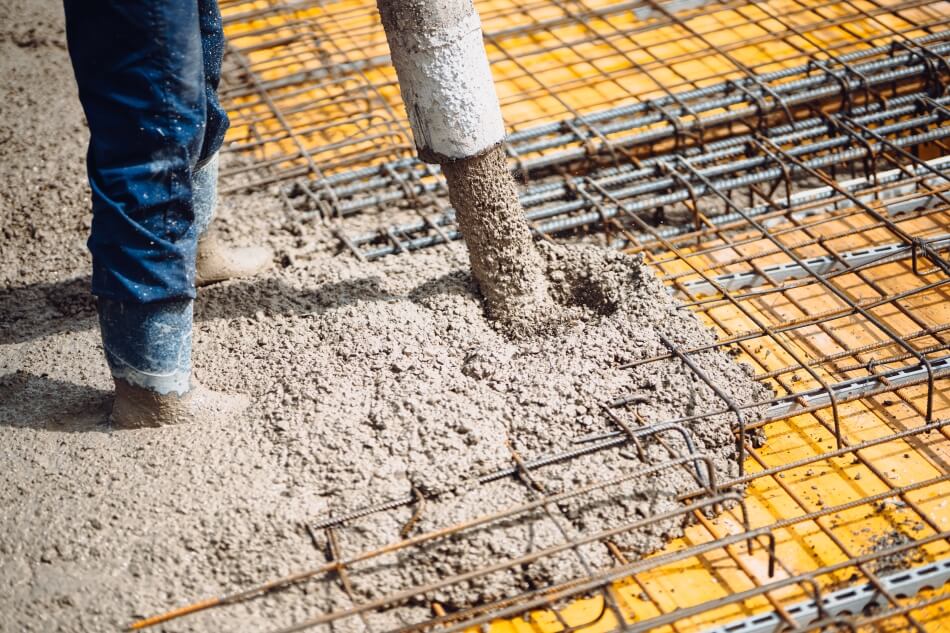
If you are planning a construction project during the colder months, one of the first questions you might ask is whether ready mix concrete can actually be used in winter. It is a fair concern. Cold weather brings challenges like frost, low temperatures and slower setting times, all of which can affect concrete performance if not handled correctly.
At Spot On Concrete, we work with customers across the UK all year round, including those searching for reliable ready mix concrete in Bradford and ready mix concrete Leeds suppliers. We know winter concreting inside out, and in this guide, we will explain exactly how ready mix concrete behaves in cold conditions, what precautions are needed, and how you can still achieve strong, long-lasting results even in winter. Our professional team has extensive experience in overcoming winter concreting challenges, ensuring quality results for every project.
We aim to give you the confidence to move forward with your project, whether you are laying foundations, pouring a driveway, or working on a commercial build. Spot On Concrete serves both business and residential customers, delivering a professional approach to every project regardless of size or scope.
Understanding How Cold Weather Affects Concrete
Concrete does not dry in the way many people think. Instead, it cures through a chemical reaction between cement and water, known as hydration. Temperature plays a big role in how quickly and effectively this process happens.
When temperatures drop below around 5°C, hydration slows significantly. If the temperature falls to freezing, the water inside the concrete can freeze before the concrete has gained enough strength. This can weaken the concrete permanently.
That said, cold weather does not automatically mean you cannot pour concrete. With the right planning, materials and experience, winter concreting is entirely possible and very common across the UK.
Can Ready Mix Concrete Be Used in Winter?
Yes, you can absolutely use ready mix concrete in winter. The key is doing it properly.
At Spot On Concrete, we regularly supply ready mix concrete throughout the colder months. The difference between a successful winter pour and a failed one comes down to preparation, timing and the quality of the mix.
Modern ready mix concrete can be tailored to suit colder conditions. Adjustments can be made to the mix design to improve early strength gain and reduce the risk of frost damage. We offer a range of products, including different types of ready-mix concrete and screed, all designed to meet quality standards and suitable for various winter construction applications. When combined with good on-site practices, winter pours can be just as strong and durable as those done in summer.
If you are unsure whether winter is the right time for your project, we always recommend that you contact us for tailored advice based on your location, application and timeframe. Our team specialise in providing expert advice and solutions for winter concreting to ensure the best results for your project.
Typical Winter Challenges When Using Ready Mix Concrete
While winter concreting is possible, it is important to understand the challenges involved so they can be managed properly.
Low Temperatures
Cold air and ground temperatures slow the curing process. This means concrete takes longer to gain strength and needs protection for longer.
Frost Risk
If fresh concrete freezes before it reaches sufficient strength, the internal structure can be damaged. This risk is highest in the first 24 to 48 hours after pouring.
Shorter Daylight Hours
Limited daylight can affect scheduling, especially for larger pours or sites with limited access.
Wet and Icy Ground Conditions
Rain, snow and ice can affect ground preparation and formwork stability.
These challenges are not deal breakers, but they do require experience and careful planning.
How Ready Mix Concrete Is Adapted for Winter Use
One of the biggest advantages of using ready mix concrete in winter is that the mix can be designed specifically for cold weather conditions.
When you order from us, we consider all of these factors. Our efficient delivery and mixing processes help keep your winter projects on schedule, minimising delays and ensuring optimal results. We also make the ordering and delivery process easy for our customers, even during challenging winter conditions, so you can rely on us for convenient and accessible service.
Adjusted Cement Content
Increasing the cement content can help generate more heat during hydration, allowing the concrete to gain strength more quickly.
Use of Accelerators
Accelerating admixtures can be added to speed up the setting and early strength development. This reduces the time the concrete is vulnerable to frost.
Warm Mixing Water
In some cases, the water used in the mix is warmed to raise the initial temperature of the concrete.
Reduced Water Content
Lower water content improves strength and reduces the risk of freezing within the mix.
When you order from us, we consider all of these factors. Whether you need ready mix concrete for a domestic extension or for a commercial slab, we make sure the mix suits the conditions.
Concrete Mix Design for Winter Conditions
Successful construction projects in West Yorkshire, particularly during the colder months, begin with a clear understanding of concrete mix design requirements. This becomes especially valuable when winter weather introduces additional considerations that can affect the durability and longevity of the final result. For projects across Leeds, Bradford, and Yorkshire, it can be helpful to recognise that each construction application has distinct needs that benefit from careful analysis rather than standard approaches.
The development of concrete mixes suited to winter conditions allows for more reliable outcomes across different applications. Where projects require standard concrete for foundations, fibre reinforced concrete for enhanced performance, or self-compacting concrete for complex pours, the selection process benefits from understanding the specific demands of each situation. Site access limitations and requirements for small loads or difficult-to-reach locations often need consideration in the planning phase. This approach enables delivery services to be structured around efficiency and readiness for use, regardless of site constraints or project scale.
Quality and consistency form the foundation of reliable concrete performance. The use of high-grade materials and carefully selected aggregates helps ensure that concrete mixes perform to expected standards, even under winter conditions. It can be valuable to seek guidance on the most appropriate mix for specific applications—whether for paving, screed, driveways, patios, or commercial foundations—as this allows for the right combination of strength and finish to be achieved consistently.
Efficiency in both time and cost often begins with accurate planning and calculation of concrete requirements. This approach tends to reduce waste while improving overall project efficiency, creating a smoother construction process from beginning to completion. Where site access presents challenges, experienced delivery planning can ensure concrete reaches its destination effectively, helping projects maintain their schedule regardless of weather conditions.
Construction projects of varying size and complexity benefit from ready mix concrete that meets specific requirements and performance expectations. For winter construction work planned across West Yorkshire, Leeds, Bradford, or surrounding areas, it can be helpful to engage with suppliers who understand local conditions. This allows for informed advice, accurate quotations, and the identification of concrete mix designs that align well with both project needs and site conditions.
Ground Preparation in Winter
Good ground preparation is essential at any time of year, but it becomes even more critical in winter.
The ground must not be frozen. Pouring concrete onto frozen ground can lead to settlement and cracking once the ground thaws. If frost is present, the area should be protected or allowed to thaw fully before pouring.
Formwork should also be free from ice, snow and standing water. Taking the time to prepare properly will significantly improve the final result.
If you are unsure whether your site is ready, get in touch today, and we can help you assess the conditions before your delivery is booked.
Protecting Concrete After Pouring
Protection after pouring is one of the most important aspects of winter concreting.
Insulation
Concrete should be covered with insulating blankets, hessian or polythene sheets to retain heat and prevent frost exposure.
Avoiding Rapid Cooling
Sudden temperature drops can be just as damaging as freezing. Gradual cooling helps the concrete cure evenly.
Extended Protection Time
In winter, concrete needs to be protected for longer than in warmer months. This ensures it reaches sufficient strength before being exposed.
We always advise customers on the best protection methods based on the specific mix and weather forecast.
Timing Your Winter Concrete Pour
Timing matters more in winter than at any other time of year.
Ideally, concrete should be poured when daytime temperatures are above freezing and rising, rather than late in the afternoon when temperatures are falling. Morning pours often work best, giving the concrete more time to generate heat during the day.
Weather forecasts should be checked carefully, particularly overnight temperatures. Planning around cold snaps can make a big difference to the outcome.
Our team can help you schedule your delivery at the most suitable time, so contact us if you want support planning your winter pour.
Domestic Projects Using Ready Mix Concrete in Winter
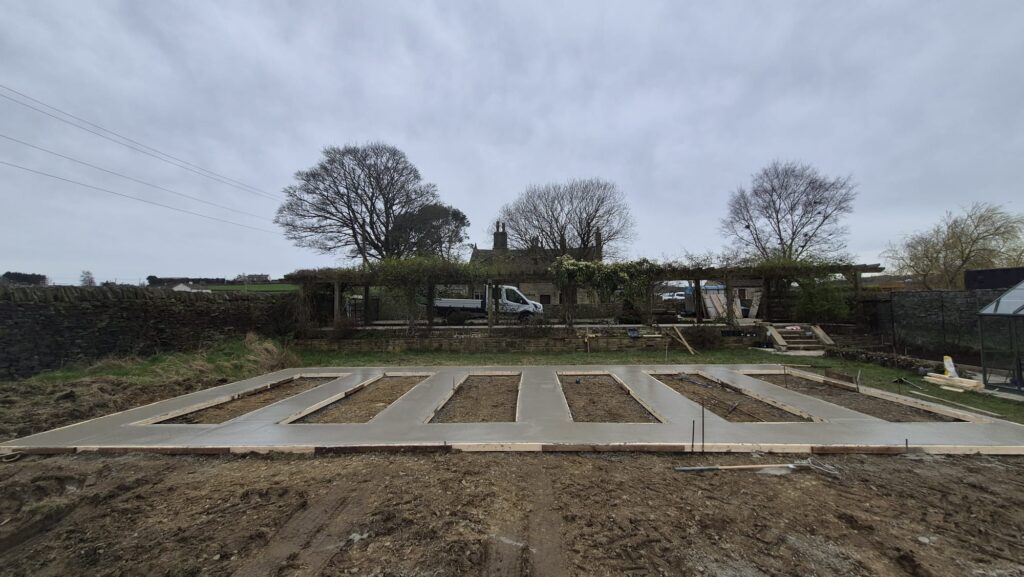
Many domestic projects can still move ahead during winter with the right approach. Ready mix concrete is especially suitable for residential projects such as home foundations, driveways, and patios, ensuring quality and reliability even in colder months.
Foundations and Footings
Foundations can be poured in winter as long as the ground is not frozen and adequate protection is used. There are different types of concrete mixes available to suit various foundation and footing requirements, ensuring optimal strength and durability for each specific application.
Driveways and Paths
Driveways are possible, but the curing time will be longer. You should avoid using the surface until it has fully gained strength.
Garden Bases
Shed bases, garage bases and patio foundations are commonly poured in winter, particularly when projects are planned for spring builds.
If you are a homeowner looking for ready mix concrete in Bradford, we can guide you through the process step by step.
Commercial and Trade Projects in Cold Weather
For commercial projects, stopping work entirely during winter is rarely practical. That is why winter concreting is standard practice across the construction industry.
With proper planning, ready mix concrete can be used for slabs, floors, structural elements and infrastructure work throughout the colder months.
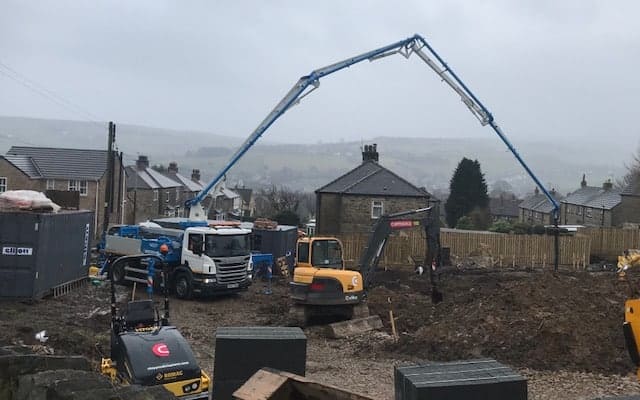
Our experience working with contractors means we understand the pressures of deadlines and site logistics. We also offer concrete pump hire services for commercial and trade projects in Bradford and the surrounding areas, providing convenient and efficient solutions for concrete delivery.
If you are considering a winter concrete project and want expert guidance, we are always here to help. Spot On Concrete supplies high-quality ready-mix concrete across the UK, with the experience to support your build, whatever the season.
Common Myths About Winter Concreting
There are a few misconceptions that often put people off using concrete in winter.
One common myth is that concrete cannot be poured below 5°C. In reality, it can, as long as precautions are taken.
Another is that winter concrete is weaker. When done correctly, winter-poured concrete can reach the same strength and durability as summer concrete.
Finally, some believe ready mix concrete is unsuitable for small winter jobs. In fact, ready mix is often the best option because of its consistency and quality control.
Why Choose Spot On Concrete for Winter Projects?
We know that choosing the right supplier makes all the difference, especially in winter.
We take the time to understand your project, your location and the conditions you are working in. Our team advises on mix design, timing and aftercare, not just delivery.
If you are searching for dependable ready mix concrete in Leeds or ready mix concrete in Bradford, we are here to help you get the job done properly, whatever the season.
If you are planning a winter pour and want expert advice, get in touch today and speak to our friendly team.
Planning for Spring Builds
Many customers use winter to prepare bases and foundations so they are ready to build as soon as the weather improves. This can save time and help projects stay on schedule.
By pouring concrete during winter, you can avoid the spring rush and often benefit from better availability.
We regularly support customers who think ahead, and we are always happy to help you plan your project timeline.
Final Thoughts on Using Ready Mix Concrete in Winter
So, can you use ready mix concrete in the winter? The answer is yes, absolutely.
Winter concreting is safe, effective and widely used across the UK when done properly. With the right mix, good preparation and careful protection, your concrete can perform just as well as it would in warmer months.
At Spot On Concrete, we pride ourselves on helping customers achieve excellent results all year round. Whether you are working on a small domestic project or a large commercial build, we are ready to support you.
If you would like tailored advice or a quote for your project, contact us and let us help you move forward with confidence.
FAQs About Ready Mix Concrete
Can ready mix concrete set properly in cold weather?
Yes, ready mix concrete can set properly in cold weather. The curing process is slower, but with the right mix design and protection, it will still achieve full strength.
What is the minimum temperature for pouring concrete?
Concrete can be poured when temperatures are above freezing, and even slightly below if precautions are taken. The key is preventing the concrete from freezing during early curing.
How long does winter concrete take to cure?
Curing takes longer in winter. While concrete may set within a day or two, it can take several weeks to reach full strength, depending on conditions and mix type.
Is ready mix concrete better than site-mixed concrete in winter?
Yes, ready mix concrete is usually better in winter because the mix is precisely controlled. This reduces risk and improves consistency compared to site mixing.
Can I pour a driveway with ready mix concrete in winter?
You can, but extra care is needed. The ground must not be frozen, and the concrete must be protected after pouring. Usage should be avoided until full strength is reached.