Autumn can be one of the busiest periods for construction projects. Contractors are often working to complete external work before winter arrives, while commercial developments, groundworks and infrastructure projects continue regardless of the changing seasons.
Concrete can still be successfully placed throughout autumn, but falling temperatures, heavier rainfall, shorter daylight hours and changing ground conditions all need to be considered.
Planning becomes increasingly important as the season progresses. A concrete pour that would be straightforward during a warm, dry summer morning may require additional preparation when temperatures begin falling towards single figures.
Understanding how autumn conditions affect concrete can help contractors protect quality, avoid unnecessary delays and keep projects moving as winter approaches.
Why Falling Temperatures Matter to Concrete
Concrete gains strength through a chemical reaction between cement and water known as hydration.
Temperature has a significant influence on how quickly that process takes place. As conditions become cooler, concrete generally develops strength more slowly.
This does not mean concrete cannot be poured during autumn, but contractors need to allow for the fact that setting and early strength development may take longer than during warmer weather.
This becomes increasingly important as temperatures approach 5°C.
Contractors planning work later in the season may also find our guide to using ready mix concrete during winter useful. It looks in more detail at frost, low temperatures, curing and other cold-weather considerations.
A mild September pour and a late-November project can present very different conditions, even though both technically fall within autumn.
Check the Forecast Before the Pour
Looking at the temperature when work begins is not enough.
Concrete continues developing strength long after the finishing team leaves the site, so contractors should consider the forecast for the hours and days following placement.
A relatively mild afternoon could be followed by a much colder night.
Rainfall should also be considered. Persistent rain can affect site preparation, access, excavations and finishing operations before it becomes a direct concern for freshly placed concrete.
For important commercial pours, weather monitoring should form part of the planning process rather than something checked quickly on the morning of delivery.
Be Particularly Careful as Temperatures Approach 5°C
Around 5°C is an important point when planning colder-weather concrete work.
As temperatures fall, the hydration process slows and freshly placed concrete takes longer to develop early strength. If conditions fall towards freezing, additional precautions may be necessary.
This does not mean every concrete operation automatically stops when the thermometer reaches 5°C.
It means the conditions need greater consideration.
Project managers may need to think about the concrete specification, delivery timing, protection after placement and whether the forecast makes proceeding sensible.
As autumn moves towards winter, those decisions become increasingly important.
Choose the Correct Concrete for the Application
Changing weather does not alter one of the most important rules of any concrete project: use the correct specification.
Commercial developments, foundations, structural work, industrial floors and infrastructure projects can all require different concrete strengths and characteristics.
Spot On Concrete’s guide to concrete strengths, mixes and grades explains the different options available and how compressive strength and concrete grade relate to different construction applications.
Where an engineer or project specification states a particular concrete grade, that specification should be followed.
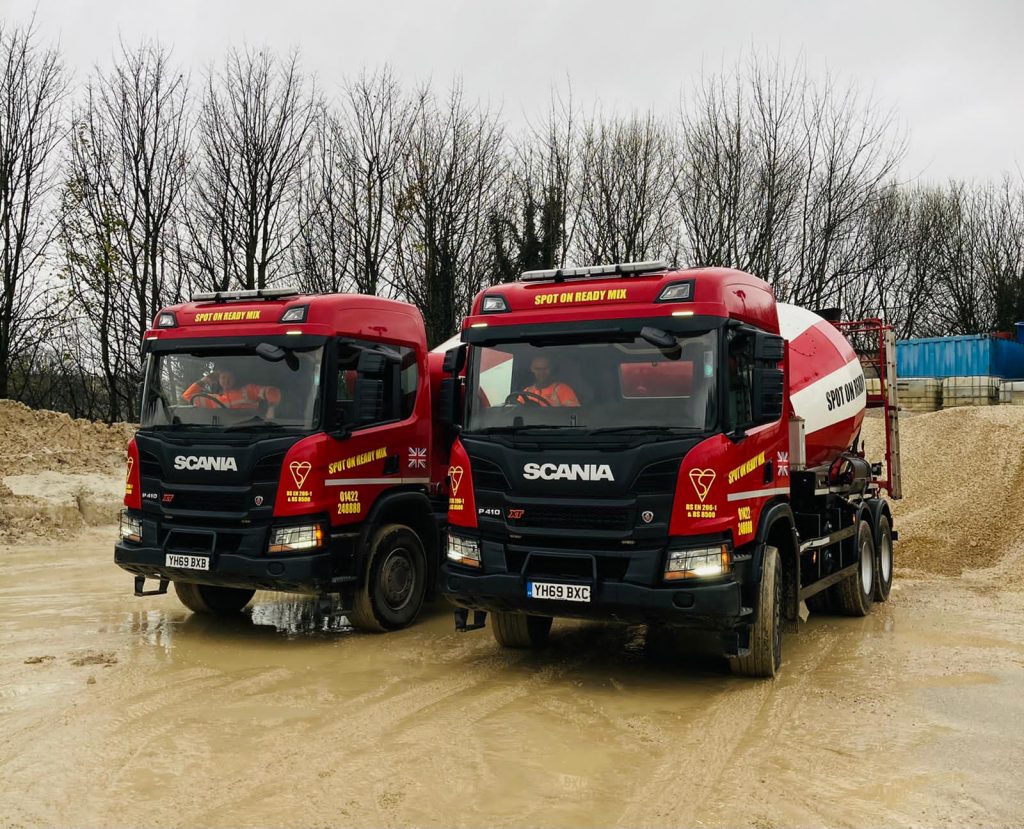
Spot On Concrete also supplies ready mix concrete for a wide range of domestic, trade and commercial applications.
Autumn conditions are not a reason to improvise with the mix. If falling temperatures create concerns, these should be considered before the concrete is ordered.
Allow More Time for Strength Development
One of the biggest practical differences contractors may notice as temperatures fall is slower strength development.
Work following the concrete pour may therefore need to be scheduled differently.
Formwork should not automatically be removed according to the same timetable used during warm summer conditions. Loading a slab or bringing heavy equipment onto newly placed concrete should also be based on appropriate strength requirements rather than simply the number of hours that have passed.
For commercial contractors, allowing a little extra flexibility in the programme can be far less expensive than damaging concrete by moving to the next stage too quickly.
Efficient concrete delivery can also help reduce unnecessary lost time elsewhere in the programme. Our article on how ready mix concrete helps builders save time and money explores some of the wider efficiency benefits.
Protect Fresh Concrete from Frost
Early autumn temperatures may remain relatively mild, but the risk of frost increases considerably later in the season.
Fresh concrete should not be allowed to freeze during its early development.
If temperatures are forecast to fall significantly overnight, contractors should have suitable protection ready before the pour begins.
Depending on the project, this could involve insulated covers, frost blankets or other temporary protection.
The important point is to plan for cold conditions rather than attempting to respond after the concrete has already been placed.
Late afternoon pours deserve particular attention because temperatures may continue falling throughout the first night.
Make Sure the Base Is Ready
The condition of the area receiving the concrete matters throughout the year, but autumn introduces additional complications.
Heavy rainfall can saturate the ground, create standing water and soften temporary access routes.
Later in the season, frost can also affect exposed sub-bases.
Concrete should not simply be placed onto unsuitable ground because the programme says the pour needs to take place that day.
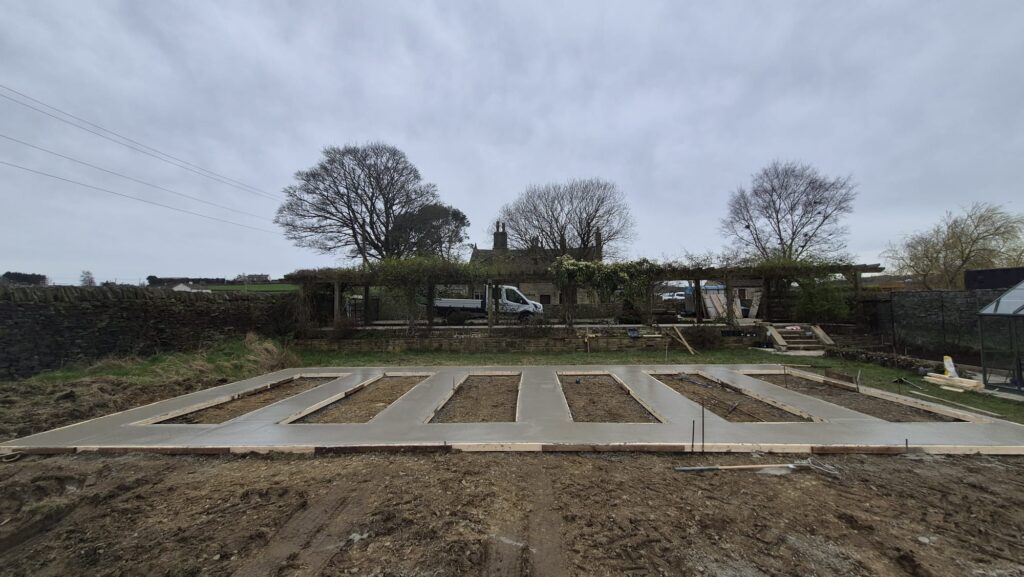
Before placement, contractors should check the sub-base, formwork, reinforcement and surrounding work area.
Good preparation helps provide a stable foundation for the concrete and reduces the likelihood of problems appearing later.
Autumn Rain Needs to Be Part of the Plan
Temperature receives much of the attention when discussing autumn concrete work, but rainfall can cause just as many practical problems.
Heavy rain before delivery can turn a straightforward site into one with poor vehicle access, waterlogged excavations and muddy working areas.
Rain during placement can also complicate finishing operations.
Contractors should therefore have a plan for changing weather rather than assuming a short-range forecast will remain accurate.
Temporary covers may be appropriate for some pours, while larger sites may need to consider drainage, vehicle routes and pump positioning.
The aim is not to avoid every drop of rain. That would make autumn construction in the UK extremely difficult.
The aim is to prevent foreseeable weather conditions from causing delays that could have been avoided through better planning.
Plan Vehicle Access as Ground Conditions Change
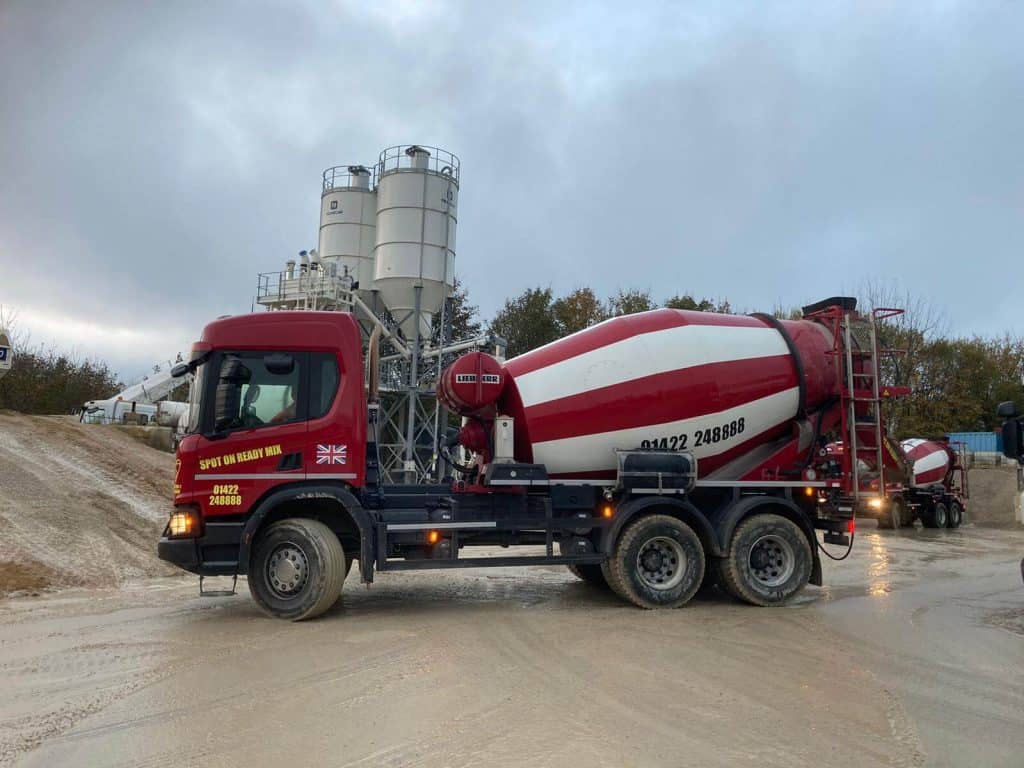
A concrete wagon that can comfortably reach a pour during summer may face very different access conditions after several weeks of autumn rain.
Temporary roads, unmade tracks and soft ground can deteriorate quickly.
Concrete delivery vehicles are heavy, so access needs to be capable of supporting them safely.
The same applies to pumping equipment.
For larger developments, Spot On Concrete provides commercial concrete for construction, industrial and infrastructure projects where delivery scheduling and site logistics are particularly important.
Deciding where vehicles will stand, turn and leave the site should happen before they arrive.
If access is likely to deteriorate during autumn, contractors may need to improve the route, create a suitable hardstanding area or reconsider the delivery position.
Concrete Pumping Can Help on Difficult Autumn Sites
Wet ground and restricted access can make manually transporting concrete even less practical during autumn.
Using professional concrete pumping services allows concrete to be transferred from the delivery vehicle directly towards the pour location.
This can reduce the need for the mixer itself to travel across poorer ground conditions.
Pumping can also be useful where the concrete needs to travel through restricted areas, around existing structures or across significant distances.
The best pumping method will depend on the site, access and pour location.
Planning the pumping equipment alongside the concrete order can prevent unnecessary delays when the vehicle arrives.
Consider the Reduced Daylight
Another obvious but sometimes overlooked autumn change is daylight.
By late autumn, contractors have considerably fewer usable daylight hours than during summer.
A concrete pour starting later in the afternoon could continue after natural light has disappeared.
Commercial sites should therefore consider whether sufficient temporary lighting is available around the pour area, delivery point, pedestrian routes and pumping equipment.
This is particularly important where project schedules require work outside normal daytime hours.
Reduced daylight does not have to shorten the working day, but suitable lighting and site preparation become increasingly important as autumn progresses.
Allow for Shorter Working Windows
Autumn weather can reduce the number of hours available for certain external construction activities.
Heavy rain in the morning may delay preparation work. Reduced daylight can affect afternoon operations. Falling evening temperatures may also influence when a pour should begin.
This makes coordination increasingly important.
The concrete should ideally arrive when the site is properly prepared to receive it.
The workforce, reinforcement, formwork, pump and pour area should all be ready before the scheduled delivery wherever possible.
Good communication between the contractor and concrete supplier becomes especially valuable when weather conditions are less predictable.
Volumetric Concrete Can Provide Useful Flexibility
Estimating concrete quantities accurately remains important at any time of year.
Autumn ground conditions can sometimes make real-world requirements harder to predict. Excavations may alter following heavy rain, ground levels can change and additional preparation work may slightly affect the dimensions of a pour.
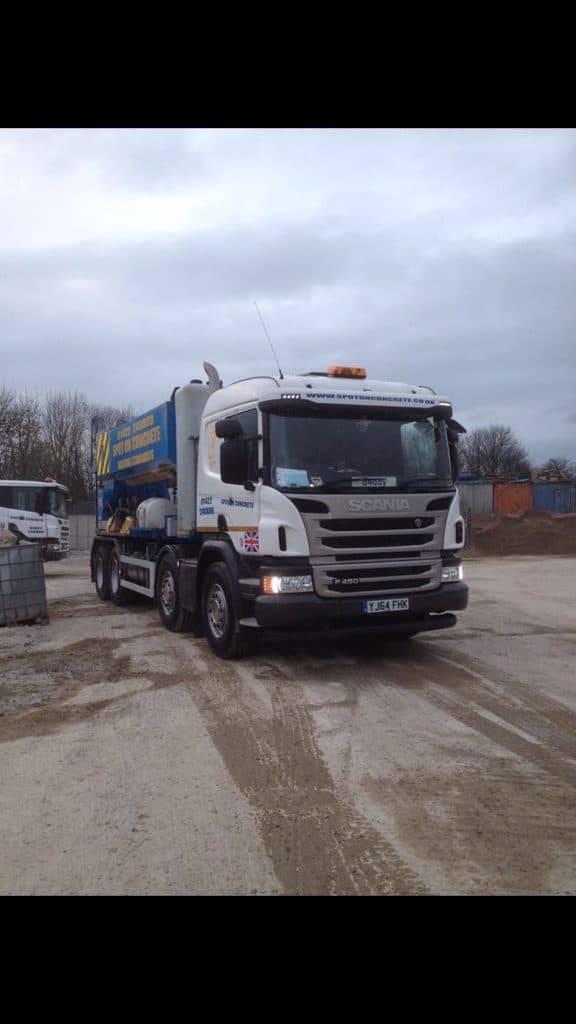
Volumetric concrete can provide additional flexibility because the concrete is mixed fresh at the site.
The quantity produced can therefore be adjusted more closely to the amount actually required.
This does not remove the need to estimate beforehand, but it can help reduce the problems associated with significantly over- or under-ordering.
For contractors looking to reduce unnecessary surplus material, we have also explained how volumetric concrete can help cut concrete waste and costs.
Calculate the Concrete Requirement Before Ordering
Autumn weather should not become an excuse for rushed estimating.
Contractors should calculate the expected concrete volume carefully before placing an order.
For a basic rectangular pour, the calculation is:
Length × Width × Depth = Volume
Allowances may also need to be made for uneven surfaces, over-excavation and other site conditions.
The concrete strengths, mixes and grades page includes Spot On Concrete’s concrete calculator, which can help estimate the volume required from the length, width and depth of the area.
Accurate estimating allows the supplier to prepare appropriately and gives the contractor a clearer idea of how long the pour may take.
This becomes especially important on larger projects requiring several loads.
Quality Assurance Matters Throughout the Year
Weather conditions change throughout autumn, but concrete quality should remain consistent.
For contractors working on structural, commercial and infrastructure projects, knowing how the concrete is produced and tested can provide additional reassurance.
Spot On Concrete’s concrete quality assurance information explains its BSI accreditation, regular audits, volumetric mixer calibration and concrete testing facilities.
Quality control becomes particularly important where concrete needs to meet a defined project specification.
The focus during autumn should therefore be on adapting preparation, placement and protection to suit the conditions rather than compromising the quality of the material itself.
Autumn Concrete Planning Checklist
Before an autumn concrete pour, contractors should consider:
- Check The Daytime And Overnight Weather Forecast.
- Confirm The Required Concrete Grade And Specification.
- Consider Whether Temperatures Could Approach Freezing.
- Prepare Appropriate Protection If Frost Is Forecast.
- Check The Sub-Base And Formwork Before Delivery.
- Deal With Standing Water And Unsuitable Ground Conditions.
- Confirm Concrete Vehicle Access After Heavy Rain.
- Plan The Concrete Pump Position Where Pumping Is Required.
- Ensure Suitable Lighting Is Available For Late Pours.
- Allow For Slower Strength Development In Cooler Conditions.
- Avoid Loading Concrete Prematurely.
- Calculate The Required Concrete Volume Before Ordering.
- Coordinate Delivery Times With The Site Team And Other Contractors.
Considering these points beforehand is considerably easier than attempting to resolve problems halfway through the pour.
Do Not Wait Until Winter to Start Cold-Weather Planning
One of the easiest mistakes to make is treating cold-weather concreting as something that only matters in December, January and February.
UK autumn conditions can change quickly.
An early October afternoon may still feel relatively warm, while only a few weeks later overnight temperatures could be approaching freezing.
Contractors should respond to the actual forecast and site conditions rather than simply the date on the calendar.
As soon as daytime and overnight temperatures begin falling, curing times, protection and site preparation deserve additional attention.
Contractors planning projects that will continue deeper into the colder months can read our full guide to using ready mix concrete during winter for further cold-weather guidance.
Keep Autumn Concrete Projects Moving
Autumn does not need to bring concrete projects to a halt.
With the correct concrete specification, appropriate site preparation, sensible weather monitoring and proper protection after placement, construction work can continue successfully as temperatures fall.
The biggest difference is that contractors have less margin for poor planning.
Cooler temperatures can slow strength development. Rain can affect access and groundwork. Frost can threaten young concrete, while shorter days can make delivery and placement more difficult.
Planning the concrete supply alongside these changing conditions helps reduce avoidable disruption.
Spot On Concrete supplies ready mix concrete, volumetric concrete, commercial concrete and specialist concrete pumping services for construction projects across Yorkshire and the surrounding areas. For example, if you are looking for concrete in Huddersfield then let Spot On Concrete be your regular supplier.
For contractors planning autumn work, discussing the concrete specification, quantity, site access and delivery requirements before the pour can help keep the project moving as conditions become colder.