Getting concrete to the right place is just as important as choosing the right mix. Whether you are laying a driveway, pouring extension foundations, creating a patio or managing a commercial slab, the placement method affects labour, timing, finish quality and site safety.
Concrete pumping and wheelbarrowing can both work well, but they suit very different site conditions. With more than 40 years of supplying concrete across West Yorkshire and surrounding areas, we regularly help customers weigh up access, pour size, ground conditions and the time available before recommending a practical approach.
The best option is not always the one with the lowest initial price. A method that appears cheaper can become costly if it requires extra labour, delays the pour, affects the consistency of the concrete or makes it difficult to finish the surface correctly.
Understanding the Two Methods
Wheelbarrowing involves discharging concrete from the mixer into wheelbarrows and moving it manually to the pour area. It is familiar, flexible and often suitable for small domestic jobs where the route is short, level and clear.
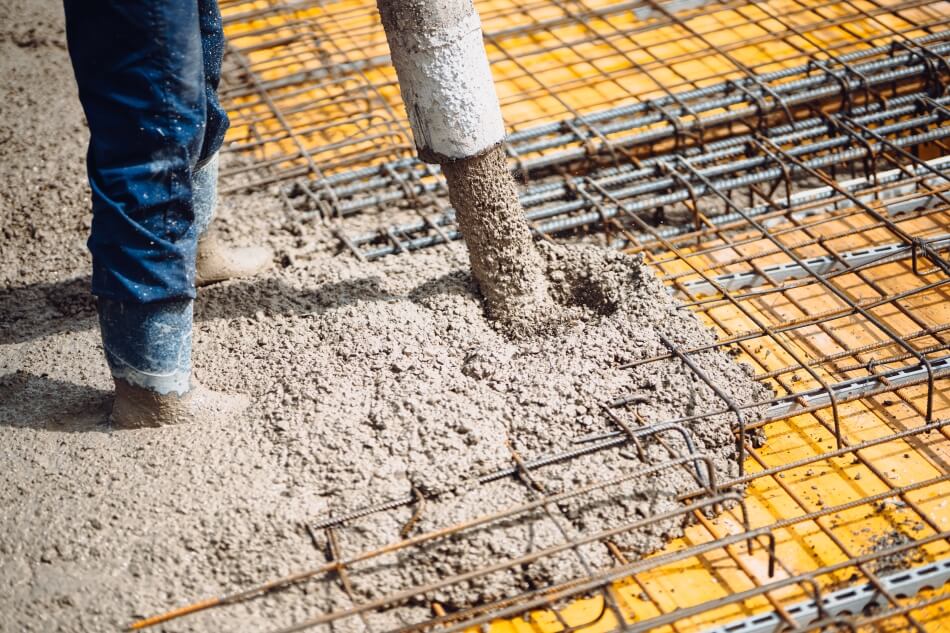
Concrete pumping uses a pump and pipeline to transfer fresh concrete directly from the delivery vehicle to the placement point. Depending on the site, this may involve a line pump with hoses laid along the ground or a boom pump that reaches over obstacles and into difficult areas.
Neither method changes the need for sound preparation, a correct specification and proper curing. For domestic work, our domestic concrete supply service can help establish the right quantity, grade and delivery arrangement before the vehicle arrives.
When Wheelbarrowing Makes Sense
Wheelbarrowing remains a sensible option for straightforward, smaller pours. A small path, shed base, garden edging project or compact patio may not justify the cost of a pump if the truck can park close to the work area.
It works best where there is a firm, reasonably level route between the discharge point and the shuttering. The team also needs adequate space to turn, tip and return safely without crossing finished work or damaging lawns, drainage covers and landscaping.
Wheelbarrowing may be suitable when:
- The concrete volume is modest and can be placed promptly.
- The discharge point is close to the pour location.
- Access is level, stable and sufficiently wide for loaded barrows.
- A capable team is available throughout the delivery and finishing period.
- The project can tolerate a more labour-intensive placement process.
There can be useful control in moving smaller loads, particularly around awkward edges or narrow forms. However, this benefit reduces quickly when the route is long or includes slopes, steps, tight gates, soft ground or obstacles.
The Limitations and Risks of Wheelbarrowing
A wheelbarrow holds only a limited volume, so repeated trips can slow down the pour considerably. Fresh concrete has a working time, and the placing team must avoid creating cold joints or visible differences where one area begins to stiffen before the next load arrives.
Manual handling is another major consideration. A loaded wheelbarrow is heavy and difficult to control on uneven ground, especially in wet weather, and fatigue can affect both safety and the standard of placement.
Common wheelbarrowing mistakes include:
- Underestimating the number of people needed to keep up with the delivery.
- Using loose boards or unsuitable ramps over soft or muddy ground.
- Trying to barrow across steep slopes, steps or narrow access points.
- Adding water on site because the concrete feels harder to move.
- Leaving too little time for levelling, compacting and finishing.
Adding water without agreement from the supplier is particularly risky because it can reduce strength and alter the intended performance of the mix. If workability needs to be considered, it should be discussed before delivery so the concrete can be specified appropriately.
Wheelbarrowing can also introduce inconsistency if some loads are tipped at the far end of the pour after a delay. This is especially relevant for broad slabs, foundations and areas where a level, uniform finish is important.
Why Concrete Pumping Is Often the Better Choice
Concrete pumping delivers material continuously and directly to where it is needed. This can make a substantial difference on projects with restricted access, longer distances, elevated sections or sizeable volumes that need placing efficiently.
A pump can transfer concrete over a house, through a controlled route around a building or into a rear garden where a mixer cannot safely reach. It is often valuable for foundations, retaining walls, floor slabs, basement work, large driveways and commercial applications.
Our trained operators coordinate the pumping operation with the placing team, but the customer or contractor still needs to ensure that formwork, reinforcement, levels and finishing labour are ready. Choosing the right equipment matters too, which is why our advice on selecting a suitable concrete pump considers the route, reach, volume and nature of the pour.
The practical benefits of pumping include:
- Faster, more continuous placement than multiple wheelbarrow journeys.
- Reduced manual handling and fewer people moving heavy loads.
- Access to areas behind buildings, above ground level or beyond obstacles.
- Less disruption to gardens, paths and prepared ground.
- Better potential for a consistent pour when a larger area must be completed in one operation.
Pumping does not remove the need for skilled finishing. It simply gets the concrete to the right point more effectively, allowing the groundworkers to focus on spreading, compacting, striking off and protecting the finished surface.
What to Consider Before Booking a Concrete Pump
A pump needs space for safe set-up, and the operator needs a clear plan for vehicle positioning and hose routing. Tell us about narrow roads, overhead cables, low bridges, parked vehicles, gates, slopes and any requirement to cross a neighbour’s land or shared access.
The pump line must be positioned so it does not create avoidable trip hazards or obstruct essential site movement. For larger projects, the route should be agreed before delivery day, with the pour area and workforce ready when the pump arrives.
Check these points during planning:
- Where the mixer and pump can park safely without blocking public access.
- The distance and route from the pump to the furthest placement point.
- Whether hoses need to pass through a gate, around a property or over an obstacle.
- The ground condition and whether it is suitable for the vehicle weight.
- The space available for washout, hose cleaning and controlled site exit.
- The availability of a competent team to guide, place and finish the concrete.
Pumping also requires a compatible concrete mix. Mix design, aggregate size and workability all need to suit the pumping process and the structural requirement, rather than being chosen solely because they are easy to place.
We recommend sharing drawings or clear dimensions where possible, particularly for foundations and structural work. Our experience with calibrated volumetric mixers, slump checks and, where required, cube testing helps us support customers who need a concrete supply aligned with the project specification.
Comparing Cost, Labour and Programme Time
Wheelbarrowing may have a lower direct equipment cost, particularly for a very small and accessible pour. However, this should be compared with the cost of additional labour, the risk of overrunning the delivery slot and the potential consequences of a poorly coordinated placement.
A pump has an additional hire cost, but it can reduce the number of labourers needed for transportation and shorten the time concrete is being handled on site. On a larger pour, this can make the overall operation more controlled and may protect the construction programme.
It is helpful to consider the full cost rather than just the pump charge. Include ground protection, barrow boards, ramp construction, labour, waiting time, access repairs and the value of completing the pour cleanly in one continuous operation.
For commercial floors, larger foundations and projects with programme pressures, a pump is frequently the more efficient choice. Our commercial concrete options are planned around the intended application, delivery sequence and placement requirements rather than treating every job as the same.
Making the Right Choice for Common Projects
Driveways and patios: Wheelbarrowing may suit a compact front garden with direct access, but pumping becomes attractive where the area is at the rear of the property or the route would cross landscaping. A continuous placement method can be especially useful for larger decorative or plain concrete areas that need consistent levels.
Extension foundations: A pump is often preferred because foundation trenches can be difficult to reach and require a steady supply of concrete. Barrowing along trench edges can be slow and can increase the risk of disturbing excavations or reinforcement.
Garden rooms and shed bases: For a small base near the road, wheelbarrows may be perfectly practical. For a base behind a house with no side access, a line pump can avoid taking loaded barrows through the property.
Commercial and industrial work: Larger volumes, stricter timing and complex access generally favour pumping. The exact choice still depends on the site plan, required output, mix specification and the contractor’s method statement.
Winter conditions deserve extra thought regardless of placement method. Cold weather changes preparation and curing priorities, and our advice on using ready-mix concrete in winter explains why protection and timing should be planned rather than left to chance.
Preparation Matters More Than the Method Alone
The best placement method cannot compensate for incomplete preparation. Before concrete arrives, check excavation depths, sub-base compaction, drainage, reinforcement, formwork, access routes and finished levels.
Arrange enough competent people to place and finish the concrete without rushing. Have tools, vibrators where appropriate, straightedges, tampers, floats, curing materials and weather protection ready before discharge begins.
Concrete should be placed as close as possible to its final position and handled only as much as necessary. Once placed, it needs correct compaction where required, suitable finishing and curing that prevents premature moisture loss or frost damage.
We also encourage customers to order carefully. Accurate dimensions and realistic allowances for irregular excavations help avoid shortages, waste or hurried decisions during the pour.
What We Get Asked…
Is concrete pumping always quicker than wheelbarrowing?
Usually, pumping is quicker for longer distances, restricted access and larger volumes because concrete travels directly to the work area. For a very small pour beside the vehicle, the set-up time and cost of a pump may not be justified.
Can a concrete pump reach a back garden?
Often, yes, but the answer depends on the hose route, distance, property layout and safe vehicle access. We need to assess gates, obstacles, ground conditions and overhead restrictions before confirming the most suitable arrangement.
Does pumping affect the quality or strength of concrete?
Pumping does not inherently reduce quality when the mix is correctly specified and handled properly. Strength is affected by the mix design, water control, placement, compaction and curing, so these factors need attention whichever method is used.
How many people are needed if we use wheelbarrows?
It depends on volume, travel distance, ground conditions and the finishing work required. We recommend discussing the site plan in advance, as relying on too few people is one of the most common causes of a difficult and delayed pour.
Our Final Thoughts
Wheelbarrowing is a practical choice for small, accessible pours with a short and stable route. Concrete pumping is normally the stronger option when access is restricted, distances are longer, manual handling would be excessive or a larger volume needs placing continuously.
Start by looking honestly at the site rather than choosing purely on equipment cost. A clear discussion about access, concrete grade, quantity, workforce and programme will identify the method that gives your project the best chance of a safe, efficient and well-finished pour.
Contact us to talk through your plans and site conditions before booking. We can help you select the right concrete supply and placement method for domestic, commercial and construction projects across West Yorkshire and beyond.