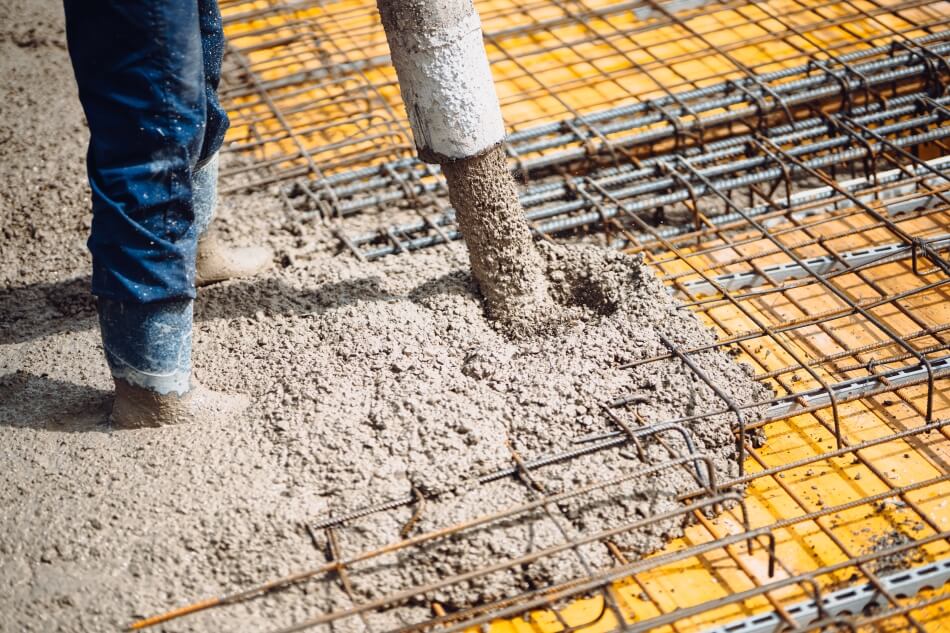
On a busy commercial construction site, even a short delay can affect the wider programme. If concrete arrives late, plant may be left standing, contractors can be held up and scheduled work may have to be rearranged.
Night-time concrete deliveries give site teams more flexibility by allowing pours to take place outside the busiest working hours. This can help keep the project moving, reduce disruption and make it easier to work around traffic, access restrictions and other trades.
For contractors managing large developments, industrial sites and infrastructure schemes, having access to a reliable commercial concrete supplier that can work around the requirements of the project can make planning considerably easier.
Why Concrete Delivery Times Matter
Commercial construction projects usually involve several contractors, different stages of work and specialist equipment booked for particular periods.
Concrete often sits right in the middle of that schedule.
If a planned pour is delayed, the effects can quickly spread to other parts of the project. A concrete pump could be standing unused, workers may have to wait and the next trade might not be able to begin as planned.
There can also be restricted periods when concrete delivery vehicles are allowed onto certain sites.
Reliable supply therefore becomes an important part of project planning rather than simply a matter of ordering material.
The benefits of reducing delays are not limited to overnight work. Our guide to how ready mix concrete can help builders save time and money looks at some of the wider ways efficient concrete supply can improve productivity on site.
Avoiding Busy Daytime Traffic
Traffic is one of the clearest reasons for arranging concrete deliveries during the evening or overnight.
A journey that may be relatively straightforward later in the day can become far less predictable during morning and afternoon peak periods.
This can be particularly important for construction sites close to:
- Town and city centres
- Major A-roads
- Motorways
- Retail developments
- Industrial estates
- Large commercial developments
- Busy residential areas
For a single small delivery, a short traffic delay may be manageable. For a major commercial pour involving several loads, however, repeated delays can disrupt the sequence of the entire operation.
Moving suitable work outside the busiest traffic periods can provide project managers with another way to organise deliveries around site conditions.
Working Around Highway Closures
Highway and motorway construction is one of the strongest examples of why night-time concrete deliveries are sometimes necessary.
Road maintenance, repairs and infrastructure improvements are frequently scheduled outside peak traffic periods. Contractors may therefore have a limited overnight working window before lanes or carriageways need to reopen.
The concrete supply has to fit into that window.
Spot On Concrete provides concrete for highway and motorway contracts, allowing concrete supply and pumping requirements to be coordinated with demanding infrastructure programmes.
Concrete also plays an important role throughout the wider transport network. Our article explaining how concrete is used on the railways looks at applications including platforms, foundations, bridges and other railway infrastructure.
On projects like these, delivery timing is often every bit as important as the amount of concrete required.
Reducing Disruption on Commercial Sites
The busiest part of a commercial construction site is normally during standard daytime working hours.
Delivery vehicles, cranes, excavators, telehandlers, subcontractors and site workers can all be competing for the same access routes and working areas.
Adding concrete wagons and pumping equipment into that environment can make logistics more complicated.
Where the site allows it, carrying out certain concrete operations overnight may help reduce congestion.
This can be particularly useful for projects such as:
- Warehouses
- Distribution centres
- Factories
- Office developments
- Retail developments
- Multi-storey buildings
- Car parks
- Major housing schemes
- Infrastructure projects
Night working still needs proper planning, but having the option gives site managers greater flexibility.
Keeping Other Trades Moving
Construction programmes are built around different stages of work.
Groundworks may need to be completed before masonry begins. A slab may need to be poured before another contractor can start work in that section of the building. Machinery and specialist teams may already be booked for the following day.
A delayed concrete pour can therefore affect considerably more than the concrete contractor.
Where appropriate, completing work overnight can make it possible for the following stage of the programme to proceed without unnecessarily occupying another full working day.
This is one reason reliable ready mix concrete supply is important on commercial projects.
The concrete must not only be suitable for the application. It also needs to be supplied in a way that works with the wider site programme.
Recovering Time When a Project Falls Behind
Few large construction projects progress without encountering some form of delay.
Bad weather, access problems, material shortages, changes to the specification or earlier work taking longer than anticipated can all affect the programme.
Once time has been lost, recovering it can become difficult.
Out-of-hours concrete deliveries provide another potential working period rather than automatically waiting until the following morning.
If the site is prepared, the necessary personnel are available and the project permits overnight working, an evening or night-time pour may help prevent delays from building up further.
This can be particularly useful where the project has a fixed completion date or other trades are already scheduled.
Choosing the Correct Concrete for the Project
Delivery speed should never come at the expense of getting the correct concrete.
Commercial projects can require very different concrete specifications depending on the application.
Foundations, structural slabs, industrial floors, retaining structures and highways can all have different performance requirements.
Our guide to different concrete mix ratios used in construction explains how the balance of cement, aggregate and other components influences the performance of concrete.
For major commercial work, the specification may be determined by an engineer or project documentation rather than simply choosing a general-purpose mix.
The required concrete should therefore be established before arranging the delivery.
Quality Matters on Time-Sensitive Projects
Working against a tight deadline does not reduce the importance of concrete quality.
In fact, the consequences of using unsuitable material on a large commercial project can be considerably greater than the cost of a delayed delivery.
Spot On Concrete supplies Kitemarked concrete for projects where consistent, independently assessed concrete quality is required.
You can also read our detailed guide explaining why Kitemarked concrete matters, including the role of recognised concrete standards and quality control.
For contractors, developers and project managers, this means delivery flexibility does not have to come at the expense of the specification required for the job.
Volumetric Concrete Can Provide Greater Flexibility
Estimating concrete quantities accurately is important, but actual site conditions do not always match calculations perfectly.
Excavations may be slightly deeper than anticipated. Ground conditions may vary. Dimensions may change as the work progresses.
Running short during a time-sensitive night pour could create a significant delay.
Volumetric concrete provides an alternative approach by mixing the concrete at the site. This allows the quantity produced to be adjusted to suit the actual requirements of the pour.
This can be particularly useful where the exact amount needed is difficult to predict beforehand.
It can also help minimise unnecessary surplus material. Our guide to cutting waste and costs with volumetric concrete looks at this in more detail.
For commercial projects where programme time and material costs both matter, reducing the chance of significantly over- or under-ordering can be valuable.
Concrete Pumping for Night-Time Pours
Getting the concrete vehicle onto the site is only the first stage.
The material then needs to reach the actual pour location.
On some sites the delivery vehicle can discharge directly. On many commercial projects, however, this simply is not practical.
Buildings, excavations, restricted access, distance or differences in level may prevent a mixer from getting close enough.
Concrete pumping services allow concrete to be transferred from the delivery point to where it is actually required.
This can be especially important during a night-time pour where the working window may already be limited.
The pumping operation and concrete deliveries should therefore be planned together rather than treated as two separate activities.
Choosing the Right Concrete Pump
Different sites require different pumping solutions.
The correct choice will depend on factors such as the distance from the vehicle to the pour, required height, available space, obstacles and volume of concrete.
Our guide on how to choose the right concrete pump explains the main factors to consider.
For contractors working across different types of site, we also have a separate guide covering which concrete pumps suit different construction projects.
Selecting the pump before the day of the pour avoids wasting valuable time trying to solve an access problem after the concrete has arrived.
Boom Pumps for Larger Commercial Projects
Some commercial sites require concrete to be placed at height, across significant distances or over buildings and other obstructions.
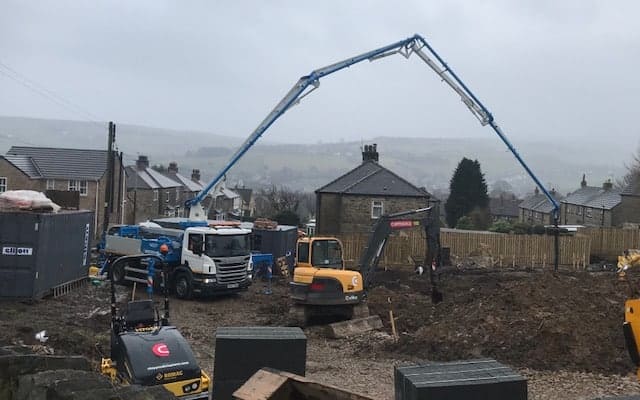
A concrete boom pump uses a hydraulically operated arm to position the delivery pipeline over or around obstacles.
This makes boom pumps particularly useful for projects involving:
- Commercial slabs
- Multi-storey developments
- Large foundations
- Structural concrete
- Industrial projects
- Hard-to-reach pour locations
For an overnight project, the boom pump can be positioned before the main pour begins so that concrete placement can start as soon as deliveries arrive.
Line Pumps for Restricted Access
Not every commercial project needs the reach of a boom pump.
Where concrete needs to travel along the ground, through structures or around obstacles, concrete line pump hire may be more appropriate.
Flexible and steel pipelines allow concrete to be moved from the vehicle to locations that would otherwise require considerable manual handling.
This can be useful on developments where access roads are narrow or where concrete vehicles need to remain away from the main working area.
If you are deciding whether pumping is worthwhile at all, our comparison of concrete pumping versus wheelbarrowing looks at the differences in labour, access and placement requirements.
Preparing the Site for an Overnight Pour
A night-time concrete delivery requires more than simply changing the delivery time.
The site needs to be prepared for working in darkness and potentially with fewer people present than during the main working day.
Good lighting is essential.
Delivery routes, pump locations, pour areas and pedestrian routes should all be clearly visible.
Before the first concrete vehicle arrives, the site team should consider:
- Vehicle access
- Turning and reversing areas
- Suitable site lighting
- Concrete pump positioning
- Required concrete quantity
- Concrete specification
- Placement method
- Labour requirements
- Noise restrictions
- Local working-hour restrictions
- Communication between site personnel and drivers
Any potential access problems are best identified beforehand.
Losing 20 or 30 minutes resolving a vehicle positioning issue may be inconvenient during the day. During a restricted overnight closure, it could take up a significant proportion of the available working window.
Plan the Quantity Before Delivery
Even when volumetric concrete is being used, it still makes sense to calculate the expected quantity carefully.
The basic calculation for a rectangular concrete pour is:
Length × Width × Depth = Volume
However, real construction sites rarely behave quite as neatly as the calculation suggests.
Uneven excavations and changing ground levels can increase the volume required.
Planning the expected quantity allows the supplier to allocate the appropriate vehicles and gives the site team a clearer idea of how long the pour may take.
For projects where quantity calculations are uncertain, Spot On Concrete also provides a concrete calculator to help estimate requirements before ordering.
Reducing Expensive Site Downtime
Downtime is rarely cheap on a commercial site.
Workers may still need paying. Pumps, excavators and lifting equipment may still be on hire. Specialist contractors could be waiting for the concrete work to finish.
The true cost of a delayed concrete delivery can therefore be considerably higher than the price of the material itself.
Efficient delivery planning can help reduce that risk.
Instead of asking whether a concrete pour can simply be squeezed into the normal working day, contractors can consider when the most practical working period actually is.
On one project, daytime delivery will make perfect sense.
On another, the combination of traffic, site congestion or an overnight road closure may mean night-time delivery is the better option.
When Is Night-Time Concrete Delivery Worth Considering?
Not every commercial concrete pour needs to take place overnight.
It becomes particularly useful where daytime conditions create unnecessary delays or logistical problems.
Night-time delivery may be worth considering when:
- Traffic is likely to affect delivery reliability
- Highway works are taking place under an overnight closure
- Site access is restricted during daytime hours
- Other contractors occupy the delivery area during the day
- Concrete pumping equipment can be positioned more easily overnight
- A project needs to recover lost programme time
- Several deliveries need to be coordinated during a continuous pour
- Infrastructure work is scheduled outside normal working hours
The key is to consider these requirements during project planning rather than waiting until the day of the pour.
Commercial Concrete Delivered Around Your Project
Commercial construction does not always fit neatly into standard working hours.
Road closures, deadlines, traffic conditions, access restrictions and busy construction sites can all affect when a concrete pour can realistically take place.
Spot On Concrete provides concrete and pumping services designed to support commercial and infrastructure projects, including flexible delivery options for work taking place outside normal hours. The company currently promotes 24/7 concrete availability and out-of-hours pumping options for appropriate projects.
With commercial concrete, ready mix concrete, volumetric supply and a range of concrete pumping options available, the complete delivery and placement operation can be planned around the requirements of the site.
If you are organising an overnight commercial pour, highway project or another time-sensitive concrete delivery, contact Spot On Concrete to discuss the concrete specification, quantity, access, pumping requirements and preferred delivery time.