When you are building or renovating a property, the floor is one of those elements that quietly affects everything else. If it is uneven, slow to install, or poorly suited to your heating system, the knock-on effects can be frustrating and expensive. That is exactly why liquid floor screed has become such a popular choice in modern construction.
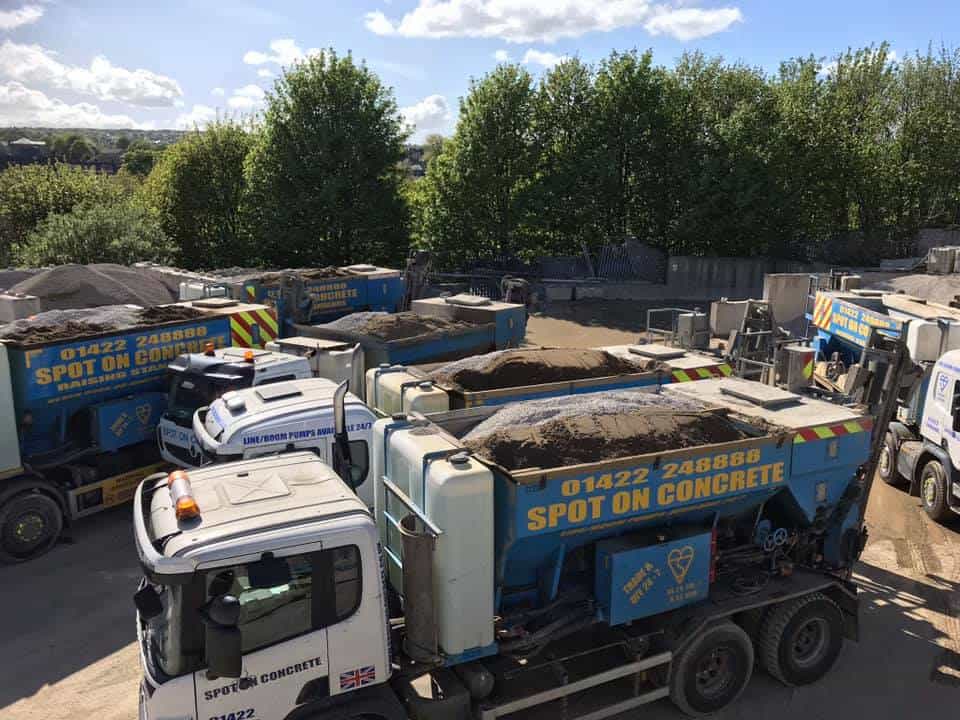
At Spot On Concrete, we work with homeowners, builders, developers, and commercial contractors who want a cleaner, faster, and more efficient flooring solution. Whether you are fitting out a new-build home, preparing a commercial unit, or upgrading a property with underfloor heating, liquid screed offers a practical and high-performance answer.
In this guide, we will explain what liquid floor screed is, why it works so well for modern builds, where it performs best, and how choosing the right floor screeding services can help you achieve a finish that is built to last.
Need help choosing the right screed? Contact our team today for expert advice or a free quote.
What Is Liquid Floor Screed?
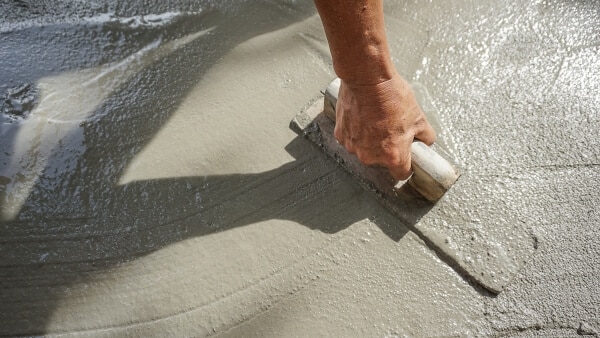
Liquid floor screed is a free-flowing material used to create a smooth, level surface over a subfloor or insulation layer. It is often applied before the final floor finish, such as tiles, laminate, engineered wood, carpet, or vinyl.
Unlike more traditional floor screeds, which are usually hand-applied and compacted manually, liquid screed, also known as flowing screed, is pumped into place and naturally levels itself. Flowing screed is valued for its self-levelling properties and smooth finish, making it ideal for projects where speed, consistency, and surface quality matter.
It is typically used in:
- New-build homes
- Extensions
- Apartment developments
- Commercial units
- Schools and public buildings
- Renovation projects with underfloor heating
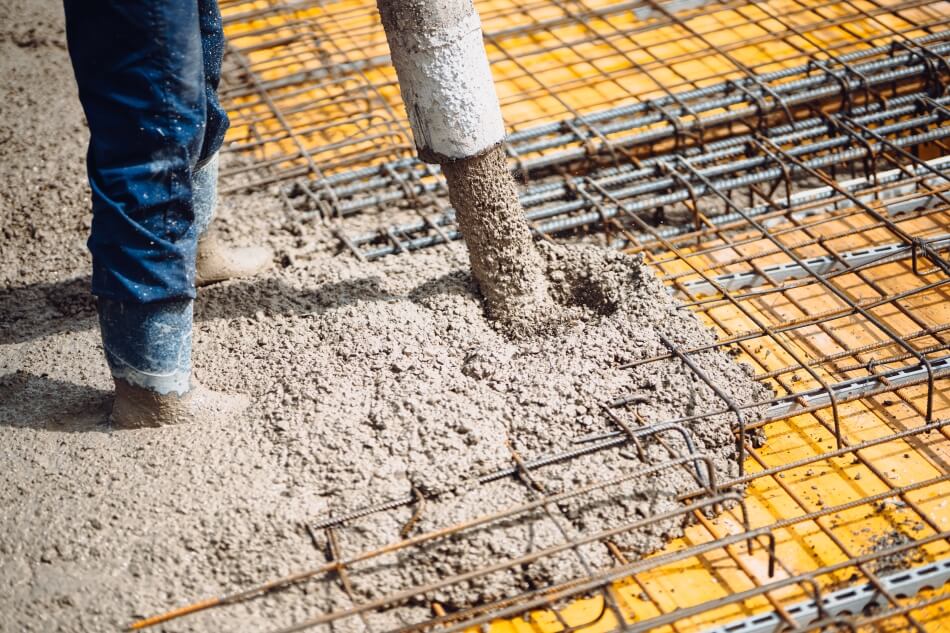
Because it flows so easily, liquid screed can cover large areas quickly and with minimal disruption. Liquid screed is often supplied as a ready mixed product, providing convenience and consistent quality for modern construction projects. That makes it especially attractive on modern construction sites where time, labour, and quality all need to work together.
Why Modern Builds Benefit from Liquid Screed
Construction has changed. Clients expect more from buildings than ever before. Better insulation, improved energy efficiency, tighter deadlines, and cleaner finishes are all now part of the standard.
The primary purpose of floor screeding is to create a smooth, level surface that facilitates easier walking and prepares the subfloor for additional flooring layers.
That is where liquid floor screed really proves its value.
1. It Creates a Smooth, Level Finish
One of the biggest reasons contractors and property owners choose liquid screed is the finish. Because it is self-levelling, it naturally settles into a flatter and more uniform surface than many traditional screeds.
This matters because the quality of the screed affects the final floor finish above it. If the base is poor, your finished floor may show movement, unevenness, or wear far sooner than expected.
With a high-quality screed installation, you get:
- Better preparation for floor coverings
- Reduced risk of surface imperfections
- A more professional final result
- Less remedial work later on
The screed provides a stable base for the wearing surface, which is the top layer of flooring that is subject to daily use and wear.
In short, a better floor starts from the base up.
2. It Is Ideal for Underfloor Heating
Modern homes and commercial spaces increasingly use underfloor heating because it is efficient, space-saving, and comfortable. However, not every screed performs equally well with these systems.
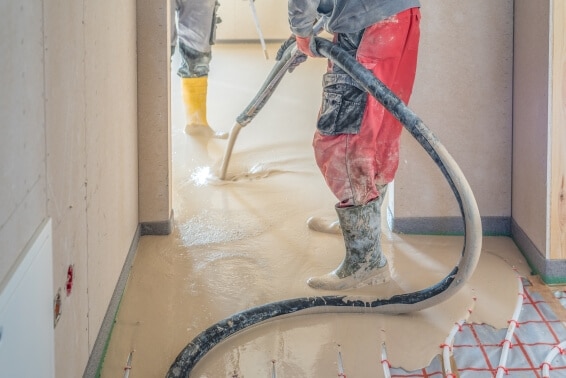
Liquid screed is one of the best options available for underfloor heating because it flows neatly around the pipework, removing gaps and air pockets. This gives you more complete contact with the heating system, which helps heat move through the floor more effectively.
That can lead to:
- Faster warm-up times
- More even heat distribution
- Improved energy performance
- Better long-term comfort
When installing liquid screed over underfloor heating, movement joints may be required to accommodate thermal movement and prevent cracking in heated floors.
At Spot On Concrete, we often recommend liquid floor screed for customers who want to get the most from their heating setup while still achieving a strong, level floor finish.
Planning underfloor heating? Contact our team for tailored advice.
Liquid Floor Screed vs Traditional Floor Screeds
There are three standard categories of screed available on the market: bonded, unbonded, and floating. There is still a place for traditional dry screed on some projects, but for many modern builds, liquid floor screed offers clear advantages.
Traditional dry screed, which falls under the broader category of cement screeds, is valued for its durability, energy efficiency, and resistance to wear. Cement screeds can be formulated for quick drying, higher strength, or fibre reinforcement, making them suitable for levelling floors and supporting underfloor heating systems. However, traditional dry screed has limitations such as poor patching ability and a lack of flexibility.
Here is how they compare:
Liquid screed is compatible with all floor types and offers a low environmental impact.
Application
Traditional screeds are usually hand-mixed or semi-dry, then spread and levelled manually. Liquid screed is pumped directly onto the floor and levels itself with minimal handling.
Installation Speed
Liquid screed is much faster to install, especially over large areas. This helps reduce labour time and keep the project moving.
Finish Quality
Because it self-levels, liquid screed generally provides a more consistent and accurate finish.
Thickness
Liquid screed can often be laid thinner than traditional screed, particularly over underfloor heating, which can support better thermal performance and reduce load. The minimum thickness required depends on the type of screed and project requirements. For example, floating screed, which is often used to reinforce an acoustic or thermal layer, requires a minimum thickness of 65mm. In contrast, liquid floor screed can be applied at depths as low as 35mm, which further reduces the overall cost due to the thin application.
Labour Requirements
Traditional screed can be labour-intensive. Liquid screed simplifies installation and can improve site efficiency. Liquid floor screed can generally withstand foot traffic after 24-48 hours of drying, whereas traditional screed typically requires longer curing times.
For many domestic and commercial projects, the decision comes down to performance, timescales, and the finish required. In most of those areas, liquid floor screed is a strong choice.
Where Liquid Floor Screed Works Best
One of the reasons liquid screed is so widely used is its flexibility. It suits a broad range of modern construction and renovation projects. Liquid screed, also known as anhydrite screed, uses a binding agent called calcium sulphate instead of cement, which gives it unique properties compared to traditional screeds.
It is ideal for domestic floors, commercial spaces, underfloor heating systems, and large-scale developments. However, for certain wet areas, such as changing rooms or environments that remain perpetually damp, not all liquid screeds are suitable. In these cases, a cementitious screed may be required to ensure long-term durability and performance.
New-Build Homes
For new-build houses, especially those with open-plan layouts and underfloor heating, liquid screed is often the ideal solution. It can be installed quickly, covers large areas with ease, and helps deliver the clean finish homeowners expect.
Extensions and Renovations
When you are extending a property or refurbishing internal spaces, getting a flat and reliable floor is essential. Liquid screed can be a practical way to bring older spaces up to modern standards.
Commercial Flooring Projects
Retail units, office spaces, schools, and industrial interiors all benefit from fast installation and consistent results. Liquid screed helps reduce delays while supporting a durable flooring system.
Multi-Unit Developments
For apartment blocks or housing developments, consistency across multiple plots is key. Pumped screed makes repeatable, efficient installation far easier than relying on slower, manual methods.
If your project includes large floor areas, heating systems, or a need for a smooth final finish, liquid floor screed is likely to be a very sensible option.
The Installation Process: What to Expect
If you have never used screeding services before, the process can sound more technical than it really is. In practice, a good screeding job should feel organised, efficient, and straightforward. The type and condition of the concrete base are important factors in the installation process, as they influence the choice of liquid floor screed and the bonding method used.
At Spot On Concrete, the goal is always to make the process easier for you. Proper installation and curing can significantly reduce the risk of cracking in liquid screed.
Step 1: Preparing the Subfloor
The existing base must be clean, stable, and correctly prepared. It is essential to remove dirt, dust, and debris from the subfloor to ensure proper adhesion and a smooth finish when applying liquid floor screed. This may include insulation boards, membranes, edge strips, and underfloor heating pipework if applicable.
Step 2: Pumping the Screed
The liquid screed is pumped directly into the prepared area. This makes it far easier to place accurately and efficiently, especially on larger sites.
Step 3: Levelling and Finishing
Because the screed is self-levelling, it quickly settles into a smooth, even finish. Light finishing techniques may be used to remove air and support consistency. In bonded screed applications, an adhesive is used to secure the screed directly to the concrete subfloor, ensuring a strong bond. For unbonded screed, the screed is laid on a PVC or damp-proof membrane, which separates it from the concrete substrate.
Step 4: Drying and Curing
The floor is then left to cure and dry before any final floor coverings are applied. Drying times vary depending on product type, thickness, temperature, and site conditions.
A professional installation makes all the difference here. Even the best material will underperform if the floor is not prepared properly or if the screed is not installed to the right specification.
Want a smoother install from start to finish? Get in touch today.
Why Surface Accuracy Matters More Than People Realise
Many people think screed is simply there to “fill the floor in” before the final finish goes down. In reality, it does far more than that.
The screed layer affects:
- How well does your final flooring sit
- How your underfloor heating performs
- How level furniture and fittings appear
- How much remedial work is needed later
- The overall feel and finish of the room
A properly bonded screed ensures a strong connection to the substrate, reducing the risk of movement and surface imperfections.
A poorly laid floor can create issues that are expensive and awkward to fix later on. It can also undermine the quality of otherwise excellent building work.
That is why choosing the right floor screeds and working with a knowledgeable supplier matters. The floor is not the place to cut corners.
Common Mistakes to Avoid with Liquid Screed
Liquid screed is highly effective, but like any building material, it performs best when used correctly. While many customers ask about costs or potential savings, it is difficult to provide an exact figure as these depend on the specific details of each project. Some of the most common issues we see are not caused by the screed itself, but by poor planning or installation shortcuts.
Inadequate Floor Preparation
If the subfloor is not properly prepared, you risk movement, contamination, or poor adhesion across the system.
Incorrect Drying Assumptions
One of the biggest mistakes is assuming the floor is ready for coverings too soon. Moisture testing is essential before the flooring goes down.
Poor Coordination with Other Trades
Screeding should fit into the wider programme of works. If the site is not ready or if other trades are not coordinated properly, it can cause delays or surface damage.
Choosing on Price Alone
The cheapest option is not always the most cost-effective. A poor screed job can lead to repairs, delays, and floor covering failures later on.
Working with an experienced team helps you avoid these issues and keeps your project moving in the right direction.
How Liquid Screed Supports Energy Efficiency
Energy efficiency is no longer a “nice to have” in construction. It is central to how homes and buildings are designed, built, and sold.
Because liquid floor screed works so well with underfloor heating, it can play an important role in improving thermal efficiency. The even coverage around pipework helps support better heat transfer, which means the system does not have to work as hard to warm the room.
This can help contribute to:
- Lower running costs
- More stable indoor temperatures
- Improved heating responsiveness
- Better use of modern low-temperature heating systems
For developers and homeowners alike, that is a major advantage. It is not just about having a flat floor. It is about building smarter from the ground up.
Why Our Screeding Services Make a Difference
At Spot On Concrete, we understand that you are not simply ordering material. You are trying to complete a project on time, on budget, and to a standard you can rely on.
That is why our approach is built around more than supply alone.
We support customers with:
- Reliable, high-quality screed solutions
- Advice on the right option for the job
- Service for domestic and commercial projects
- Flexible support around site requirements
- A wider understanding of concrete and flooring systems
We also know that every build is different. A housing development has very different priorities from a single-storey extension or a commercial fit-out. That is why our screeding services are tailored to the practical needs of your project rather than treated as a one-size-fits-all solution.
Spot On Concrete supplies both traditional and liquid floor screeds, along with broader concrete services, and promotes expert guidance, flexible delivery options, and support for underfloor heating applications across domestic and commercial projects.
Ready to plan your floor properly? Request a free quote.
How to Know if Liquid Floor Screed Is Right for Your Project
If you are weighing up your options, here are a few simple signs that liquid screed may be the right fit:
- You are installing underfloor heating
- You need a smooth, level finish across a large area
- You want to speed up the installation on-site
- You are working on a modern build or extension
- You want a cleaner, more efficient alternative to traditional screed
If several of those apply to your project, it is well worth exploring your options before you commit to another flooring method.
The earlier the screed is considered in the build process, the easier it is to get the specification, preparation, and scheduling right.
Build Better from the Floor Up
A quality floor is not just about what you see at the end. It is about what sits underneath and how well it has been designed, installed, and supported from day one.
Liquid floor screed has become a go-to solution for modern builds because it offers exactly what today’s projects demand: speed, consistency, performance, and a cleaner finish. Whether you are fitting out a family home, managing a development, or delivering a commercial space, it gives you a strong foundation for everything that follows.
At Spot On Concrete, we help customers achieve floors that are not only level and durable, but ready to perform in real-world conditions for years to come.
If you are planning a build and want the right screed solution from the outset, we are here to help.
Speak to our specialists today for expert advice.
FAQs
What is liquid floor screed, and how does it differ from traditional sand and cement screed?
Liquid floor screed is a self-compacting, flowing screed that uses calcium sulphate as a binding agent instead of cement. Unlike traditional sand and cement screed, which requires manual mixing and levelling, liquid screed is pumped into place and naturally levels itself, providing a smooth, level surface with fewer joints and reduced shrinkage.
Can liquid floor screed be used with underfloor heating systems?
Yes, liquid floor screed is highly compatible with underfloor heating pipes. Its flowing nature allows it to envelop the pipes completely, eliminating air bubbles and voids. This improves thermal conductivity and ensures heat is distributed evenly, enhancing the efficiency and responsiveness of underfloor heating systems.
How long does the drying process take for liquid floor screed before floor coverings can be installed?
Typically, liquid floor screed can be walked on within 24 to 48 hours after installation. However, the full drying and curing time depends on the screed thickness, environmental conditions, and site specifics. Moisture testing is essential before applying any floor coverings to achieve optimal results and prevent issues such as delamination.
Is liquid screed suitable for wet rooms or permanently damp areas?
Most liquid screeds, especially calcium sulphate-based ones, are not recommended for wet rooms or permanently damp areas. In such cases, a cement-based screed is more appropriate due to its better resistance to moisture and durability in wet conditions.
What are the advantages of using liquid floor screed over traditional dry screed?
Liquid floor screed offers several advantages, including faster installation through pumping, thinner application depths, reducing material use, self-levelling properties for a smooth finish, lower risk of cracking due to reduced shrinkage, and better compatibility with underfloor heating systems. It also allows for quicker drying times, enabling foot traffic within 24-48 hours, which can lead to overall cost savings on labour and project timelines.